
Combatting poaching
Combatting poaching and illegal trade in wildlife products
Poaching and the illegal trade in wildlife products such as ivory, rhino horn and pangolins are a global problem. For years, Africa and Asia in particular have seen wildlife crime intensify and become more organised. Criminal syndicates running this lucrative business operate across borders almost to the same extent as international weapons and drugs dealers. According to INTERPOL, illegal wildlife trafficking is still among the most profitable forms of transnational crime, with an estimated annual worth of up to 20 billion US dollars. However, this figure does not factor in the costs of damage to ecosystems and economies. Poaching and the illegal wildlife trade not only jeopardise countless endangered species and their ecosystems, they are also a threat to the economic basis and security of the communities and countries affected.
Since 2015, Germany has worked within the United Nations to advance a joint multilateral process against poaching and illicit wildlife trafficking. In 2015, the UN General Assembly adopted the first Resolution on tackling illicit trafficking in wildlife. It was updated in 2025.
Since 2014, Germany has also been closely involved in organising the international conferences to combat poaching and illegal wildlife trafficking, and supports the outcomes (London 2014, Kasane, Botswana 2015, Hanoi, Vietnam 2016, London 2018, Lima, Peru (regional conference) 2019). Wildlife crime must be tackled with tangible measures along the entire illegal trafficking chain in the source, transit and destination countries. The Federal Ministry for the Environment, Climate Action, Nature Conservation and Nuclear Safety (BMUKN) concentrates on areas where a particularly high impact can be expected and which are a stated focus of the Convention on International Trade in Endangered Species of Wild Flora and Fauna (CITES) and of international conferences. These areas include reducing demand for rhino horn and ivory in Asian destination countries (primarily Vietnam and China), improving enforcement of species protection laws, increasing cooperation between Asian and African countries and supporting the development and implementation of concrete strategies such as the National Ivory Action Plans.
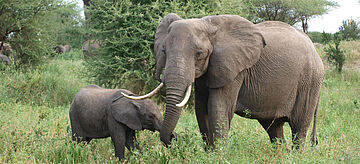
To combat poaching and illegal wildlife trafficking, the BMUKN supports projects in Africa and Asia with around four million euros each year. Funding was granted for the first time in 2015 to improve protection of African elephants and rhinos. There are estimated to be fewer than 500,000 elephants and 22,500 rhinos across Africa. After the poaching crisis peaked in 2015, subsequent years saw a marked decline in wildlife trafficking, and a further drop at the start of the COVID-19 pandemic. However, for the past several years, poaching has once more been on the rise and the number of confiscated illegal wildlife products is increasing again. Especially in South Africa, Mozambique and a number of neighbouring countries, there has been a massive increase in rhino poaching since the end of 2024. In 2025, around 400 rhinos were poached in South Africa and Namibia alone. There have also been cases of rhino poaching in Malawi, Zambia and Tanzania recently. Factors contributing to this resurgence of poaching include the political instability in some source regions, continually growing demographic pressure, the revival of organised crime structures and ongoing high demand in Asia.
The global COVID-19 pandemic that began at the start of 2020 also showed that trade in wildlife and wildlife products heightens the risk of animal-to-human transfer of pathogens, in extreme cases even on a pandemic scale. Illegal and unregulated wet markets in particular, where animals are slaughtered and sold as food, can cause the spread of such zoonoses. Together with the Federal Ministry for Economic Cooperation and Development (BMZ), in 2021 the BMUKN launched the International Alliance against Health Risks in Wildlife Trade. The Alliance brings together governments, international and multilateral organisations, scientific institutions, NGOs, representatives of civil society and local and indigenous communities. Its Secretariat was officially transferred to the World Organisation for Animal Health (WOAH) in 2025.
A major project supported by the BMUKN is the Partnership against Wildlife Crime in Africa and Asia, implemented by the Gesellschaft für Internationale Zusammenarbeit (GIZ). The BMUKN is contributing a total of 9.7 million euros (2025 to 2029) to the project. The Partnership aims to combat wildlife crime along the entire illegal trade chain, both in the African source and transit countries and in the primarily Asian destination countries. To that end, measures are being implemented to improve animal protection, strengthen law enforcement and reduce demand.
In addition to supporting other anti-poaching projects, the BMUKN is one of the biggest international donors to the African Elephant Fund (AEF), contributing over 1.5 million euros since 2011. This fund, which is administered by the United Nations Environment Programme (UNEP), supports projects to conserve the African elephant and resolve conflicts between humans and elephants in their range states.
Selected activities of the Partnership against Wildlife Crime in Africa and Asia
The following presents some of the BMUKN-funded projects of the Partnership against Wildlife Crime in Africa and Asia. The examples illustrate how illegal wildlife trafficking is tackled with concrete measures along the entire trade chain in source, transit and destination countries.
Strengthening defence against poaching
Nature conservation is only effective if the local communities near protected areas have sound economic prospects and can materially benefit from conservation measures. That is why the Partnership combines direct action against poachers with community-based development and educational activities and measures to prevent human-wildlife conflict.
In southern and eastern Africa – for example the North Luangwa ecosystem that is home to Zambia’s only African Black Rhinos and the country’s largest elephant population – protected area authorities are supported in effectively securing large swathes of land. Endangered species are guarded by specialised Rhino and Elephant Protection Units. Wildlife detection dog units are deployed in and around protected areas and at strategic points such as borders, airports, ports and road blocks. The dogs consistently track down illegal wildlife products, raising the risk of discovery for trafficking networks and hurting their cost-benefit ratio. The measure enabled authorities in Zambia to confiscate large quantities of products, including ivory and rhino horn, and detain numerous traffickers. The dogs are not only efficient trackers, they are also effective deterrents, with smuggling declining significantly at airports where they are deployed. On the south of Lake Tanganyika between Zambia and Tanzania, a specialist boat unit has improved the effectiveness of transboundary controls on the water.
To promote peaceful coexistence, small farmers in Tanzania, Zambia and elsewhere are trained in effective wildlife deterrence such as chilli fences to protect their fields from crop damage caused by elephants. Elephants have a highly developed sense of smell and avoid fences treated with chilli. This reduces conflict and supports food security. These measures are supplemented with environmental education for adults, youth and children, and with alternative, nature-friendly sources of income such as bee keeping, diversified agriculture and micro-finance systems. This secures stable foundations of life for the long term and reinforces community-based protection of the affected areas.
Strengthening enforcement to curb illicit wildlife trafficking
Strengthening law enforcement is another vital element in the fight against poaching and the illegal wildlife trade. Transnational illicit wildlife trafficking is controlled by criminal syndicates. In combatting them, authorities are pushed to their limits – and their national borders. That is why, alongside strengthening national structures, cooperation between authorities and countries has a particularly important part to play.
Investigating authorities and enforcement agencies are given practical training and back-up for their operations. Monitoring data and evaluations serve as key bases for procedures and decisions. If traffickers are successfully detained and prosecuted, the trials of high-level actors must be consistently monitored and corruption efforts thwarted. This requires training and mentoring for state prosecutors and judges, preparation of witness statements and observation and reporting of the trials. The pressure must be maintained after a successful conviction in order to ensure sentences are enforced. In this way, Malawi was able to eliminate a syndicate of international relevance. In 2021, 14 people received long prison sentences. The syndicate’s Chinese leaders are also facing charges of corruption and money laundering.
At the same time, legal reforms, anti-corruption strategies and media outreach activities support the systematic prosecution of crimes and foster public acceptance. The BMUKN also helps partner countries to implement CITES and provisions to combat money laundering from illicit wildlife trafficking. As part of the transcontinental approach to combatting the illegal wildlife trade, support for Asian enforcement agencies was expanded from 2017, when China introduced the ban on the official ivory trade. The goal is to prevent the trade shifting to the black market. For instance, physical markets and online platforms in South-East Asia are systematically monitored in order to identify new trading patterns, trafficking routes and types of illegal products at an early stage. The information obtained helps the authorities take targeted action against traffickers and their organised networks.
Cooperation between police, customs, judiciary and other competent authorities is also being strengthened, for example with training, expert consultation and information exchange. This ensures swifter identification of suspected cases, better evidence collection and more streamlined procedures. These measures are flanked with support to enable partner countries to look more closely at the financial streams from illicit wildlife trafficking. Financial investigations help shed light on the profits, backers and structures of criminal networks, facilitating a more targeted and long-term disruption of their businesses. This can also reveal connections to other forms of transnational crime, since the same networks, routes and financial streams are often used for different illicit activities.
With these measures, Germany is not only contributing to the protection of endangered species, but also strengthening constitutional structures, transboundary cooperation and the capacity of authorities to take resolute action against organised crime as a whole.
Reducing demand for illegal wildlife products
The driving force behind the illegal wildlife trade is the high demand for ivory, rhino horn and pangolin products. This demand comes primarily from South-East Asia. That is why it is not only essential to curb the supply of illegal wildlife products, but to permanently reduce the demand for them as well. This requires both better regulation of illegal trade and a lasting change in consumer behaviour. In its Resolution on demand reduction strategies, CITES highlights the importance of targeted approaches for reducing consumption. Germany supports partner countries in implementing this Resolution, for instance with practical consultation, training and the development of guidelines.

Reasons for consumption can vary widely and to understand them better it is important to analyse markets and consumption patterns. Ivory, for instance, is bought as a status symbol, luxury item or souvenir, while rhino horn and pangolin products are used in traditional medicine. In some destination countries, tourists in particular buy such products at unregulated markets or at points of sale which specifically target tour groups. Sometimes they are encouraged to purchase with false information about the ostensible legality or acceptability of the products.
To counter this, Germany supports educational and awareness raising measures such as digital campaigns, notices at airports and border crossings and tourist information. In China, Vietnam and Laos, potential buyers are directly informed about the negative impacts and legal risks, or motivated to change their behaviour with targeted messaging. Measures to date have shown that such initiatives help reduce demand. Nevertheless, recent surveys indicate that the demand and threat situation remains dynamic, especially following the recovery of international travel.
Companies and professions at key interfaces of the trade are also involved, including tourism, logistics and online businesses. It is important for these sectors to identify risks early on, avoid promoting or shipping illegal products and embed accountability standards in their day-to-day activities. In view of the increasing shift of the trade to online platforms and post or parcel deliveries, awareness raising and cooperation are very important for these sectors. Policy and institutional approaches are supported to reduce incentives for consumption, implement guidelines and expand cooperation with authorities and economic operators.
In Africa, too, information and awareness raising campaigns are directed at national consumers, tourists and political decision makers. In Malawi and Zambia, for example, information on wildlife crime and its implications for national security, economic stability and the rule of law is disseminated through outdoor advertising, exhibitions and radio campaigns in urban areas, airports and other strategic locations. The Worth More Alive campaign at airports in Zambia led to a noticeable increase in public awareness: The perception of elephants as an endangered species rose from 40 percent to 49 percent, and recognition and awareness of pangolins also improved.
In summary: The illicit wildlife trade can only be curbed effectively by both tackling criminal trafficking structures and permanently reducing demand for wildlife products. That is why Germany supports a comprehensive approach which combines enforcement, prevention and structural changes.